
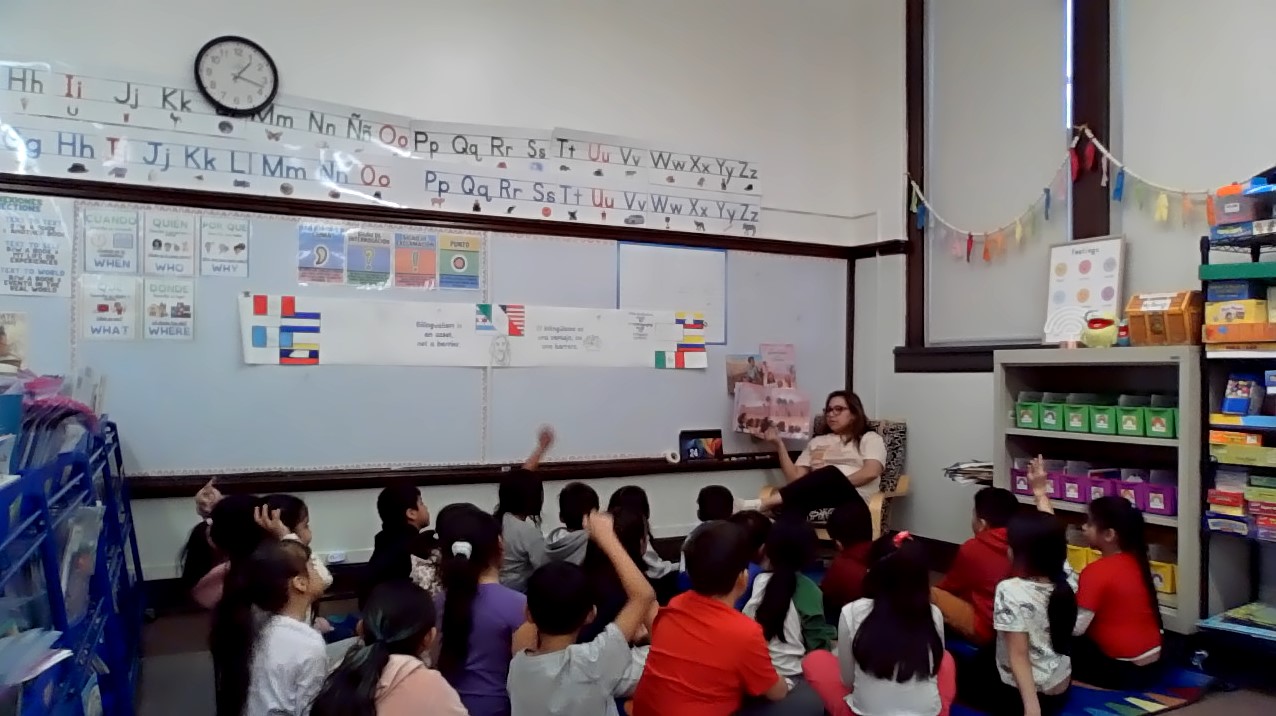
As I reviewed my second graders’ takes on our read-aloud of the day, one response stopped me cold.
Leonardo’s* paper read: “No me gustó el libro porque es de México y los Mexicanos me hicieron sufrir en el tren.” I didn’t like the book because it’s about Mexico. And Mexicans made me suffer on the train.
My heart dropped.
Leonardo was one of the three Colombian students in my class. During his journey to the United States, he rode La Bestia, a dangerous network of freight trains. This system of freight trains runs across Mexico from south to north and it is often used by those traveling toward the U.S border. It was during his time on this train that one of his parents was assaulted at knifepoint by someone from Mexico.
As a Mexican American educator teaching a room full of students with Central American and Mexican roots, I knew I had to address this carefully. Ignoring it risked allowing stereotypes, hurt and division to shape our classroom culture.
Diana Zepeda
I felt a rollercoaster of emotions: heartbreak that a child so young endured such trauma, understanding of why he expressed himself the way he did, and at the same time, deep self-reflection. His words forced me to confront how easily a single experience can shape our perceptions of others. It reminded me of moments when I, too, have allowed one interaction to influence how I thought or felt.
My classroom included 26 children representing more than five Latin American countries. The result was a daily chorus of, “My country is better than yours,” complete with passionate evidence. This rivalry often became a competition over who “belongs” in the U.S, fueled by negative media portrayals of newly arrived immigrants. If I didn’t address Leonardo’s perception of Mexicans and the rising national-pride rivalries, the negativity would seep into everything else.
I began by bringing cultural awareness into our classroom as part of culturally responsive teaching, an approach that recognizes students’ cultures, languages and lived experiences as strengths rather than barriers. I partnered with Marilyn Lara Corral from the National Museum of Mexican Art in Pilsen through their Nuestras Historias Teacher Residency Program. Together, we co-created an arts-integrated project focused on self-identity. Students worked on blank square canvases which were later sewn onto a mercado bag.
Each student received a blank canvas square. Students traced their portraits onto the lower center of the canvas. Their portraits stayed black and white. Everything else about their identity was in color: their favorite traditions, foods, activities and the cultural symbols that shaped who they were. Flags quickly filled the squares. Drawings of pupusas, tamales, pozole, arepas and pizza appeared. Each canvas square became a declaration of identity and belonging.
At the end of the project, I hung their vibrant “mercado bags,” in the hallway. Students proudly presented their work, explaining what they drew. Somewhere in that process, the tone of our classroom shifted. My second graders realized they could fully be themselves and at the same time appreciate everyone around them. Leonardo and all my students connected over food, music, and memories.
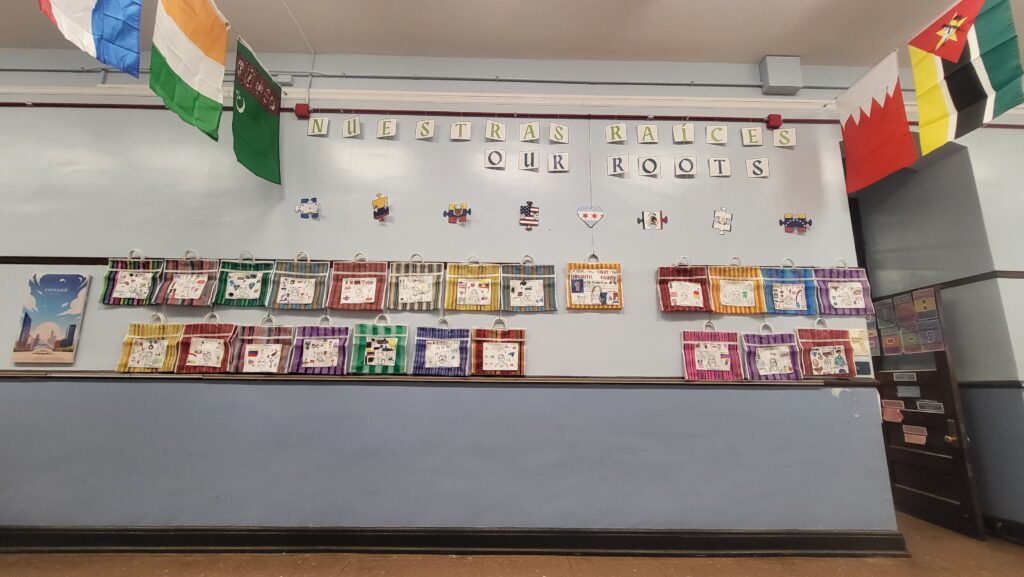
Mercado Bags displayed in Diana’s classroom. By Diana Zepeda, March 11, 2026
I have yet to meet a student who didn’t want to share their roots. Every year, my students are eager to talk about their traditions and favorite foods. When educators intentionally invite students’ cultural identities into the classroom, we do more than promote inclusion. Students thrive in spaces where they feel seen and valued.
Experiences like these reflect the purpose behind Illinois’ Culturally Responsive Teaching and Leading Standards: to guide educators in building classrooms grounded in belonging, identity and meaningful connections.
There are many ways we can make this a reality in our classrooms. Here are just a few:
Choose culturally authentic books
Representation matters, but authenticity matters more. Students frequently share connections they have made between the text and their own lived experiences. These texts include books and stories intentionally selected to reflect students’ cultures, languages and communities. This level of engagement happens more often when books reflect students’ real lives, language and culture rather than simple translations. Online stores like First Book Marketplace offer diverse, low-cost books in multiple languages that center students’ lived experiences.
Incorporate culture into participation routines
This year, I modified a Total Participation Technique in our class discussions by pairing students with images of foods from their cultures: encebollado with pan, atole with tamales, arepa with queso. When their conversation partners asked questions, they eagerly explained the dishes.
Learn about students’ cultures intentionally
I send home family surveys to learn my students’ traditions, immigration stories and values. I intentionally take my students’ backgrounds into account when lesson planning, building on cultural knowledge students like Leonardo already have. I connect lessons to experiences they recognize and use examples and texts that reflect their home lives.
Leonardo became best friends with the same classmate he often argued with. They did everything together and grew so close I had to suggest they be placed in different classrooms the following year, just to keep them out of trouble. When educators honor students’ identities, we don’t just decorate classrooms with flags and books, we build communities where healing, belonging and learning can take root and blossom.
Diana Zepeda is a 2nd grade bilingual teacher at Haugan Elementary in Chicago and a 2025-2026 Teach Plus Illinois Early Childhood Educator Policy Fellow.
Editor’s Note: Illinois Latino News granted anonymity to a minor featured in this story due to concerns about immigration status. The individual’s identity is known to the newsroom.