
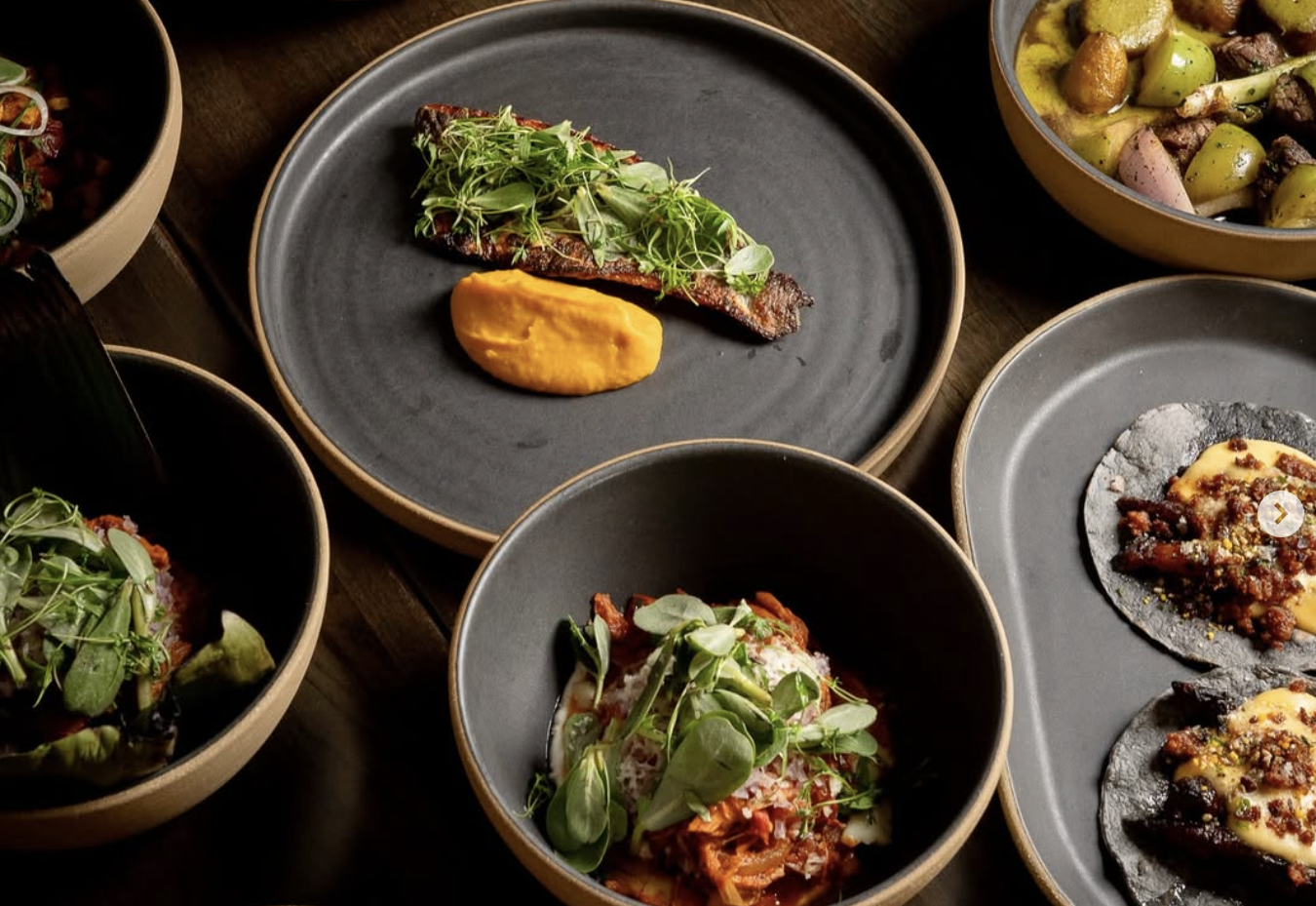
CHICAGO — When diners at Matilda, a Mexican-Peruvian restaurant in River North, are presented with what appears to be a whole avocado resting neatly on a plate, some pause, unsure of what they are seeing. The fruit looks intact, untouched. Moments later, a server breaks it open table side, revealing a smoky, reimagined guacamole beneath its charred exterior.
The dish is theatrical and unexpected. For Exodo Hospitality, the Latino-owned restaurant group behind Matilda and several other Chicago concepts, it is also deliberate. Food, one group founder said, is not just about taste. It is about storytelling, identity and creating spaces where Latino culture is treated with care and seriousness.
“We take very serious each of the plates,” said Chef José Luis Chávez, one of Exodo Hospitality’s chef co-founders. “There has to be a storytelling… what we want to show to the world.”
Chávez is a Venezuelan-born, Peruvian-trained chef whose career has moved across borders and kitchens, from South America to New York and now Chicago. He is also a co-founder of Mission Ceviche in New York City and has received recognition from the Michelin Guide.
In Chicago, he helped launch Exodo Hospitality alongside two partners, Daniel Briceño who is the current CEO, and Adolfo Gosálvez, current COO. Chávez is the Chef co-founder and culinary leader within Exodo Hospitality Group.
The idea for Exodo emerged not from a formal business plan, Chávez said, but from conversations about opportunity and ambition.
“As an entrepreneur, we have this kind of feeling, you’re always looking for something,” he said. “You want to take your career to another level.”
For Chávez, that meant building restaurants that reflect the complexity of Latino identity, shaped by migration, family history and cultural exchange. Born and raised in Venezuela to a Colombian mother and a Peruvian father, he grew up surrounded by multiple traditions before moving to Peru in his early 20s to study and work in restaurants.
“I found literally the country that I was missing,” Chávez said. “I was missing the culture. I was missing my beautiful family.”
He spent years in Peru, traveling throughout the country and learning its culinary traditions, an experience that would later inform his work in the United States. When he arrived in American kitchens, he encountered an industry that was demanding and often difficult to navigate, particularly for immigrant cooks learning new systems, measurements and expectations.
Those early experiences now shape how Exodo Hospitality operates. The group’s restaurants — which include Kayao, Ayayay, Akiro, Matilda and the bar Clandestino — blend Peruvian roots with Mexican influences, presenting dishes that feel familiar without being predictable. Chicago, Chávez said, offered the right environment for that approach.
“I don’t see it as a gap,” he said of the city’s food scene. “I see more like opportunity.”
Chicago diners, he said, are open to experimentation and new cultural experiences. “People appreciate new cultures,” said Chávez.
Behind Exodo’s creativity is a methodical process. When developing Matilda, Chávez said the team studied dining trends and found that, for example, guacamole consistently ranked among the most popular Mexican dishes in the city.
Rather than avoiding a familiar dish, Chávez treated guacamole as an opportunity to rethink how tradition could still surprise. In a city crowded with versions of the same staple, he wanted to find a way to honor what diners already loved while offering something unexpected.
“How do we create a guacamole that’s different from the thousands we have around?” said Chávez.
The answer became a charred avocado dish designed to arrive at the table looking whole and untouched, only to be cracked open moments later. The presentation is deliberate and it reflects a broader approach that guides all Exodo Hospitality’s restaurants.
That philosophy extends beyond the plate. Across its Chicago operations, Exodo Hospitality employs 180 people, supporting hundreds of families. Many of those workers come from Latino communities, a reality Chávez views as foundational rather than incidental to the business. He has watched how that connection shows up not just in the kitchen, but in the dining room.
“Our community is Latino,” Chávez said, describing moments when diners bring friends unfamiliar with the cuisine and take pride in guiding them through dishes and stories. “They become proud to show the roots, to talk about the food, the family, the identity.”
The kitchens themselves also function as spaces of mentorship, shaped by Chávez’s own experience navigating professional kitchens in a new country. Early in his career, he said, adapting to unfamiliar systems and expectations required support from others, a lesson that now informs how he leads.
“When you start growing, and you start getting better positions, that’s what I try to apply,” he said. “Be close to them. Understand them. Support them.”
Some of the cooks working alongside him today have been with him for more than a decade, said Chávez. Others have gone on to lead kitchens of their own, an outcome he sees as part of the responsibility that comes with leadership.
“For me, mentorship is not expecting anything back,” he said. “It’s just a nature of culture.”
Underlying Exodo Hospitality’s approach is a belief that representation carries obligation. Chávez argues that showcasing Latino culture in cities like Chicago and New York requires consistency and high standards, not shortcuts.
“If you want to represent Latino culture in cities like New York and Chicago, you have to be the best,” he said. “There’s no way around that.”
Quality, he added, is not optional. “For us, to provide the best is not an option.”
Asked why diners should visit an Exodo Hospitality restaurant, Chávez returned to the essentials, describing spaces designed to feel welcoming while encouraging exploration.
“It’s a place where you can find delicious food, delicious environment,” he said. “You’re going to have the opportunity to explore something different.”
For Chicago’s Latino and foody community, Exodo’s restaurants aim to offer more than a meal. Their mission is to “honor roots, traditions, and diversity—uniting people through unforgettable food, drink, and hospitality.”
Photo Credit: Matilda.Chicago Instagram Page